
Travel
Living the island dream at RIU Palace Paradise Island
This five-star Bahamas resort boasts a fresh look and adults-only concept on Nassau's famous Cabbage Beach
- 816 words
- 4 minutes
Travel
A Bahamian archipelago of 365 sun-drenched cays offers iconic wildlife and bucket-list beaches

Geography, geology and sociology are key ingredients in the recipe for paradise.
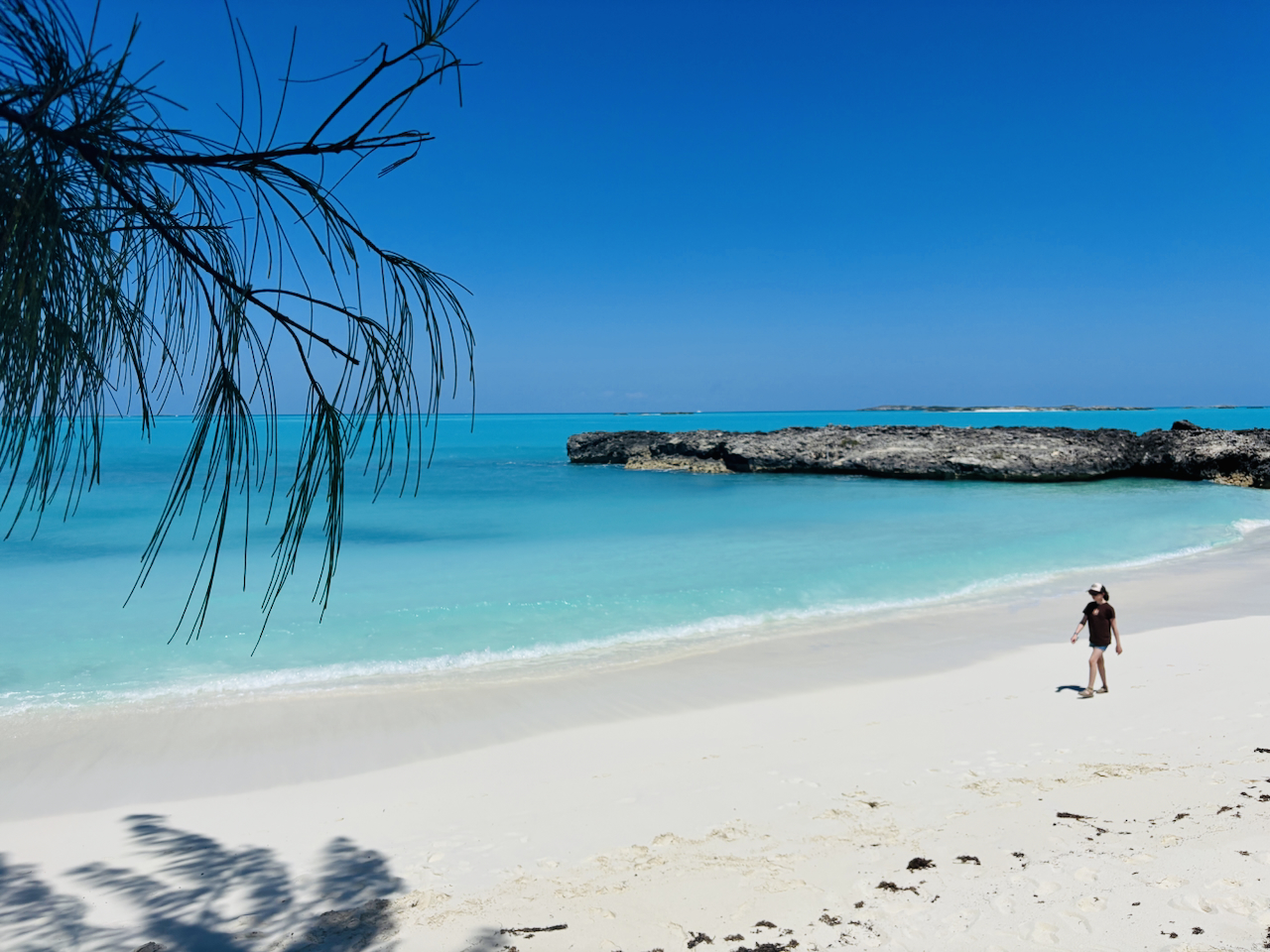
Sunlight must reflect off white calcium carbonate sandbanks, with rays infused with water containing minimal nutrients or plankton. Low population density, combined with minimal farming and urban development, ensures that pollutants and fertilizer runoff remain limited. With all this in place, the colour of the sea will test even the most creative of writers. Turquoise, azure, electric, sapphire? Phosphorescent absinthe? Aquamarine glacier? Flash-frozen Smurf? You’ll have to come up with your own descriptions when you explore The Exumas, a chain of 365 islands and cays in The Bahamas. Incandescent teal? Neon sky-blue? I give up.
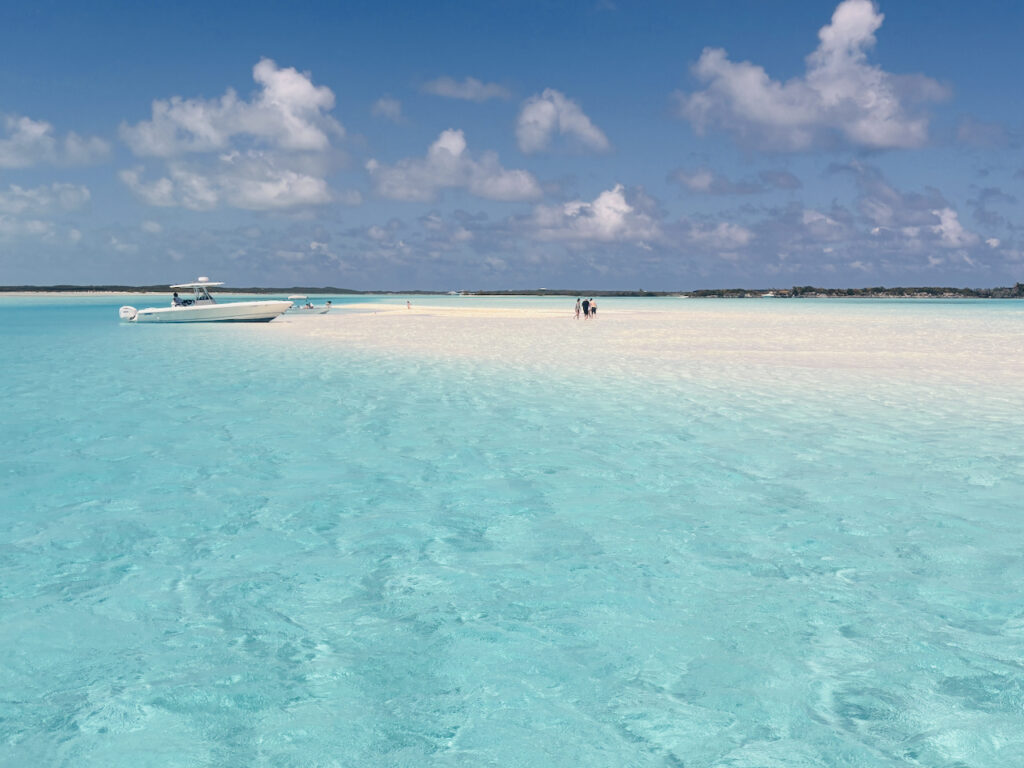
When you first see these shades — likely from a taxi or rental car driving down a hill from Exuma’s ramshackle airport, it socks you in the eyeballs. Clear, clean water is the region’s biggest selling point, followed closely by silky white beaches, beach bars, boating, sunsets, and several bucket-list experiences.
Most Canadians arrive on direct weekly flights from Toronto, bypassing the crowds and flashy resorts in Nassau for Exuma’s quieter villa rentals and boutique hotels. Others might arrive by boat, with a peak in late April when Exuma is booked solid for its annual National Family Island Regatta. Like The Bahamas, The Exumas take a definite article, and much like its reputation as a tropical paradise, it deserves it.
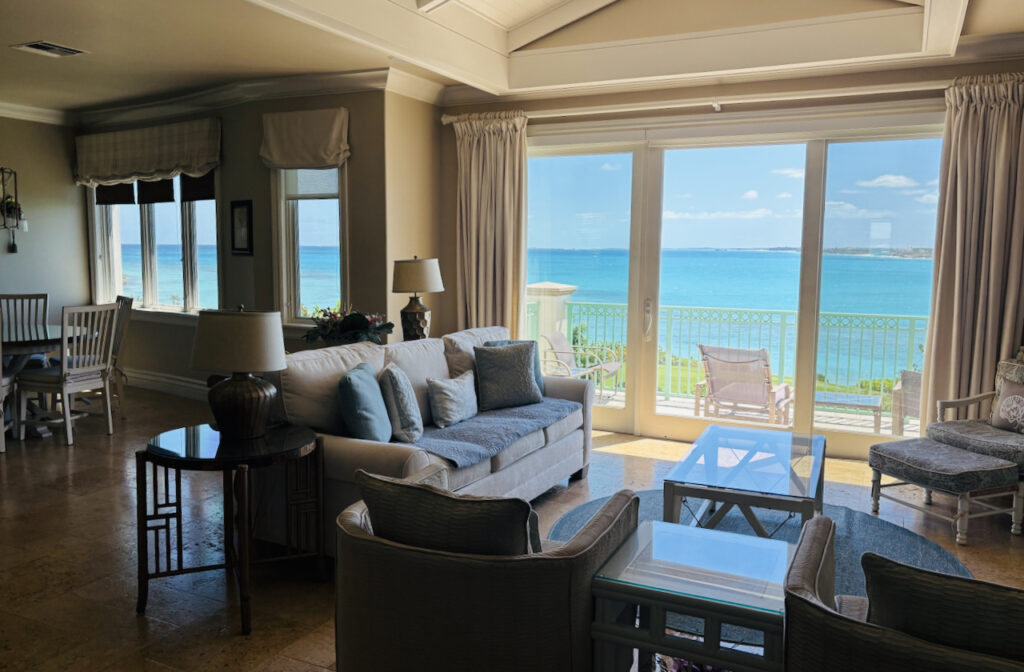
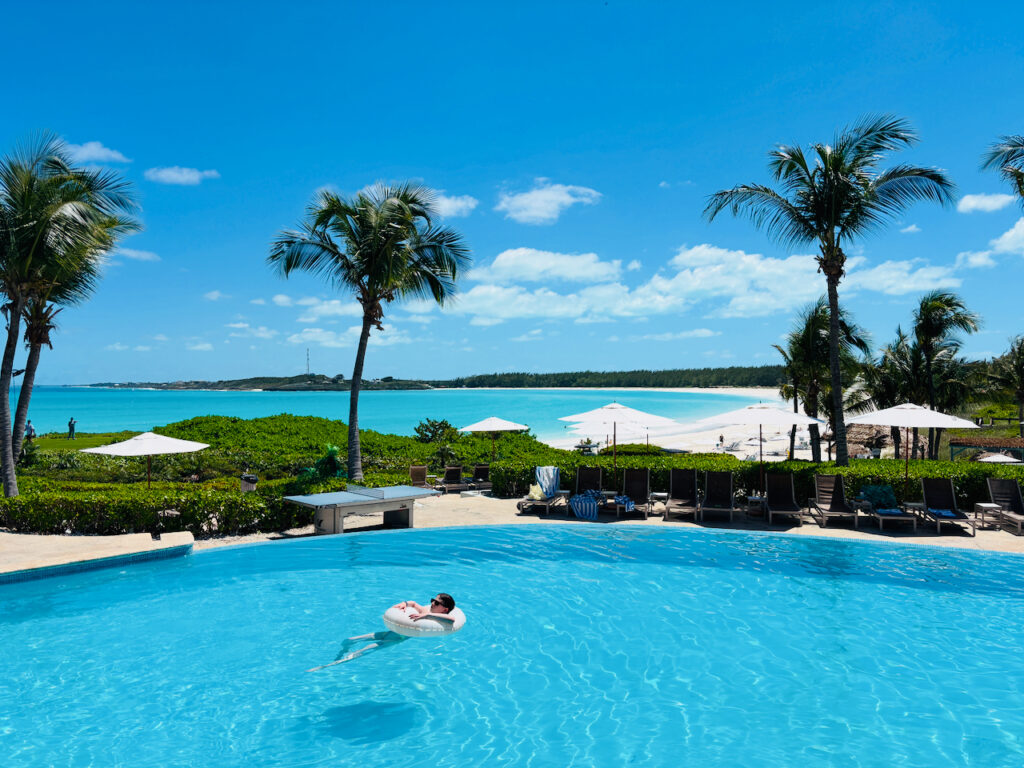
Overlooking the crescent-shaped Emerald Bay, guests sitting around the pool at the Canadian-owned Grand Isle Resort and Residences are comparing notes on their favourite beaches. One insists that nothing beats the famous Tropic of Cancer Beach, another prefers Cocoplum Beach. My daughter loved Pretty Molly Bay, along with the sprawling sandbar of Exuma Point at low tide.
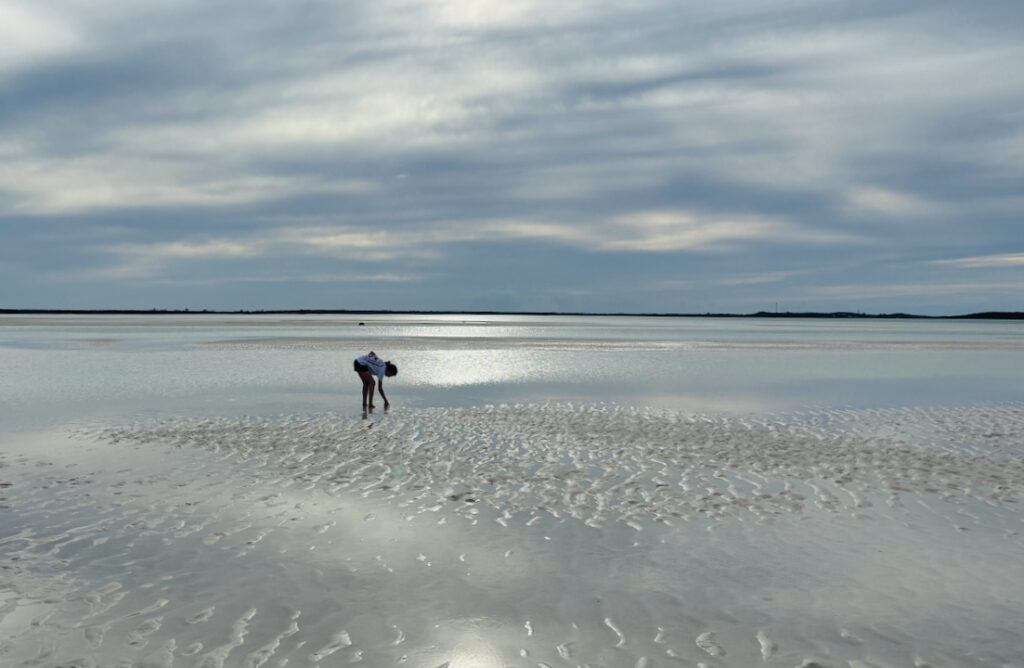
Beaches on Stocking Island get a few votes, but it’s all rather silly when you consider Exuma has hundreds of bucket list-worthy beaches. In fact, nobody needs to visit the same slice of paradise twice, although beaches are limited if you own a private island.
There are only so many islands in the world where a billionaire or celebrity can buy absolute privacy, luxury, their own runways, and be within close proximity to a major transport hub like Miami — many of these islands just happen to be in The Exumas.
Magician David Copperfield owns a few properties, renting five villas on his exclusive Musha Cay to elite guests for a cool $57,000 USD a night — five-night minimum. Johnny Depp bought an island after Pirates of the Caribbean filmed scenes in Exuma. Faith Hill and Tim McGraw spent a decade outfitting their private island, which they later sold for a casual $35 million USD. Beyoncé and Jay-Z reportedly have an island, as does Eddie Murphy. Throw in powder beaches and the lightning-blue sea colours (bio-luminescent frost? Nebular storm-blue?) and you’ll understand how Exuma’s premium geography leads to eye-watering island prices.
Standing on a sparkling sandbar named Pipe Creek, I learn that Little Pipe Cay opposite is on sale for $100 million USD, complete with a superyacht dock. Another island has its own 18-hole golf course. Of course, you don’t have to own a private island to soak in paradise, but a boat is essential. Fortunately, Exuma Watersports has a great one.
Captain Justin Lightbourn rockets his 450-horsepower 007 powerboat through the cays on another full-day tour with his family-owned Exuma Watersports. Covering more than 250 kilometres through the cays, we’ll tick off three bucket list experiences and a bonus James Bond brag. I’d argue that racing at more than 70 km/hr on sparkling crystal water is a bucket list experience unto itself.
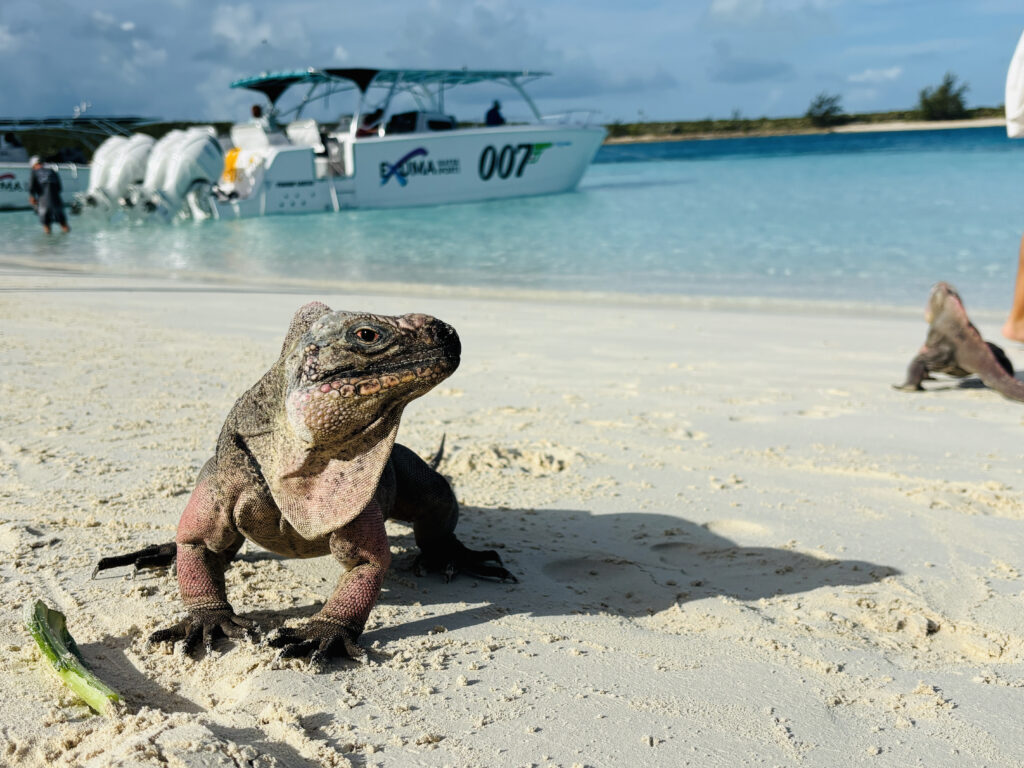
Our first stop is a sandy beach on a small island called Leaf Cay. Northern Bahamian rock iguanas are endemic to Exuma, and after centuries of being hunted by pirates and fishermen to the point of extinction, they’re staging a remarkable comeback. Introduced to smaller, predator-free cays like this Leaf Cay, the rock iguana is now in a human-conditioned relationship with visiting boaters and tour groups.
Walking onto the beach, they approach with no fear to be hand-fed collard greens, the kind of up-close and personal iguana experience I’ve only seen in the Galapagos, minus the feeding. This interaction has led to a healthy population resurgence, along with conservation concerns about the iguana’s adapted behaviour. How you choose to engage with this issue is merely a warm-up for what’s to come. The approximately 12-hectare Leaf Cay used to be owned by Nicolas Cage, and the protected iguanas ensure there are heavy development restrictions. According to Lightbourn, the island is up for sale, although prospective buyers should really be into iguanas.
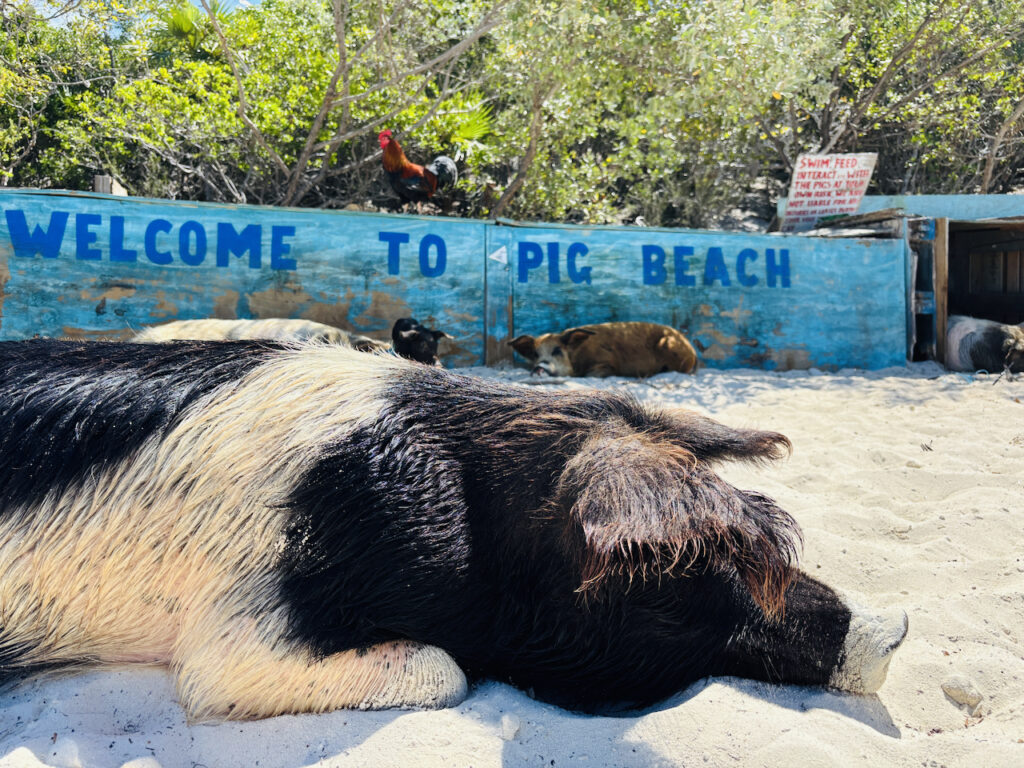
Next up are the legendary swimming pigs of Exuma, which is, without doubt, the most exploitative human-animal encounter I’ve ever seen. It’s unnerving to witness a species master emotional and physical manipulation for their own gain. Just to be clear, I’m talking about the pigs exploiting us. Instead of ending up on an island pig roast dinner plate, these happy pigs are well-fed and pampered, receiving veterinary care, belly rubs and even coconut oil massages. They are possibly the most famous pigs on Earth, and easily the strangest attraction in The Bahamas. When I poll guests on our boat about why they chose to visit Exuma, the majority tell me, “to see the swimming pigs.” It’s hard to argue, knowing the pigs first put Exuma on my radar, too.
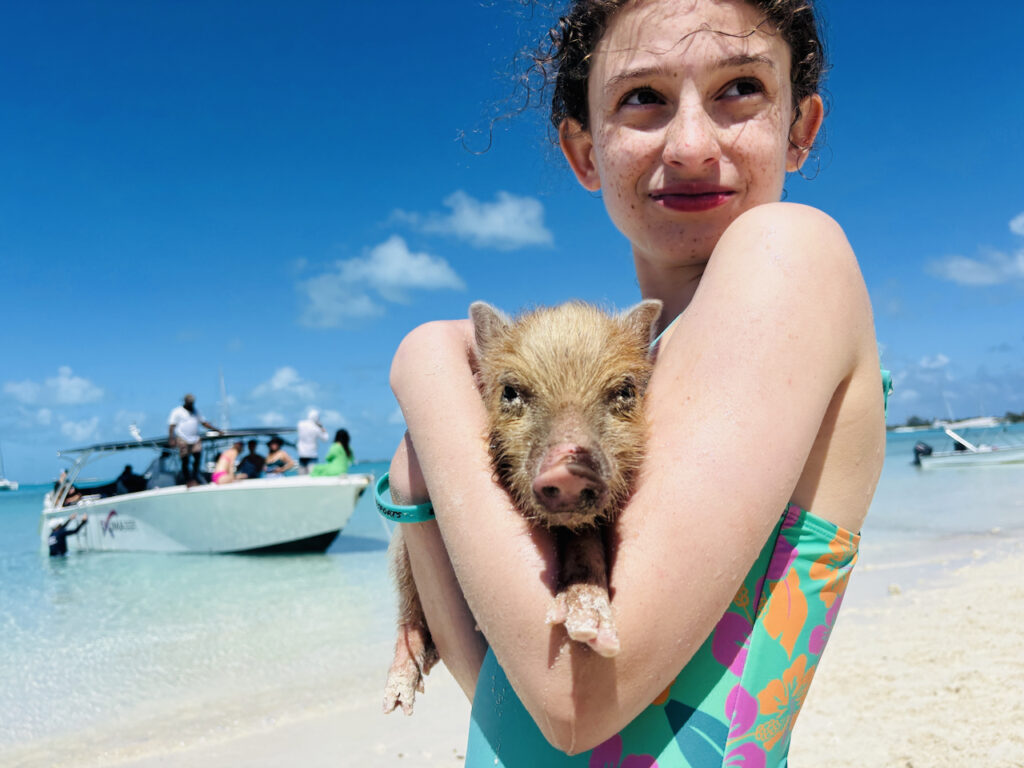
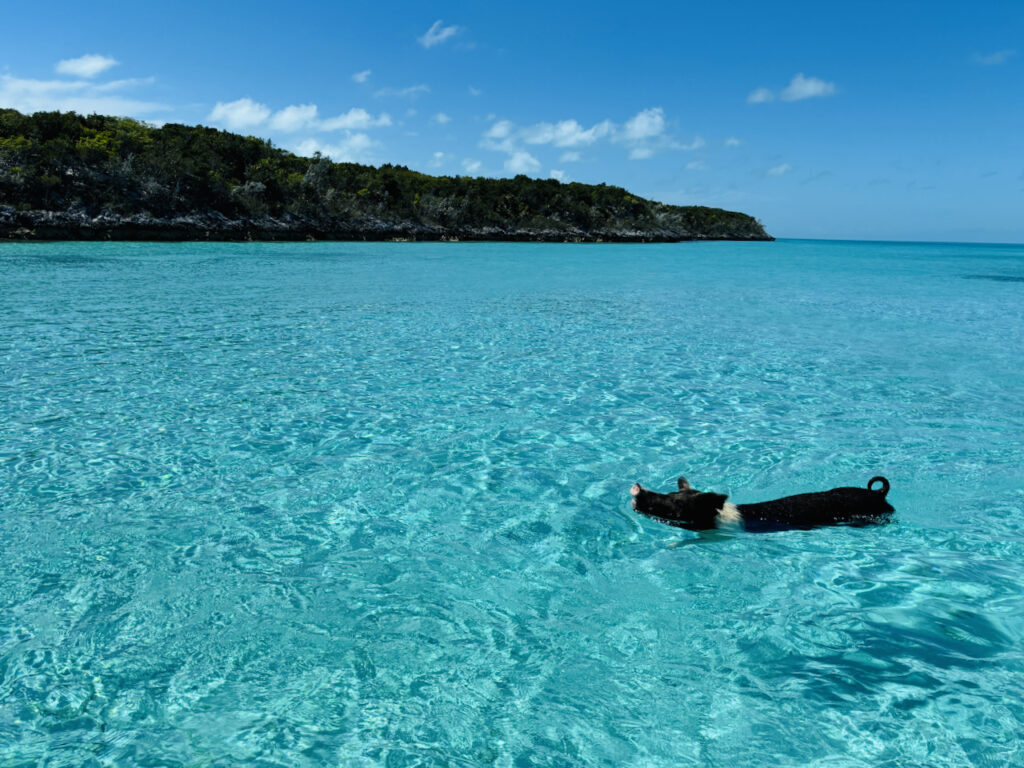
According to locals, The Bahama’s swimming pigs started when farmers on nearby Staniel Cay relocated a few of the animals to the uninhabited island of Big Major Cay. As the beach pigs roamed free and grew fat for harvesting, they attracted the attention of curious boaters. The pigs quickly realized that swimming to these boats meant easy meals and promptly took advantage of the opportunity.
Word about swimming pigs in paradise spread, and by the mid-2010s, the phenomenon was all over Instagram. Social media has been terrible for young kids, but it’s sure been good to the grunting inhabitants of the original Pig Beach. Dozens of tour boats arrive daily, loaded with veggies in a fruitless attempt to satiate the world’s luckiest swine. This unexpected success in tourism keeps the growing herd safe from any menu. Fees collected on-site fund their food, monthly vet visits and local tour guides, and while larger sows can act a little pushy, the piglets will make you think twice before ordering another ham sandwich.
My daughter squeals with delight, hand-feeding a brown piglet that appears utterly pleased by this arrangement. Pigs are among the most intelligent and cognitively complex mammals, consistently demonstrating greater intelligence than dogs. They know how to capture the heart of a little girl, and they certainly conquered Exuma.
T.R Todd, an award-winning Canadian writer and former journalist who wrote a book about the world-famous swimming pigs, says it’s all about the positive interaction. “I don’t think this attraction would have gone viral if it had been an island full of cows,” he tells me. “The pig is truly a unique and culturally loaded animal, when you consider its place in literature, films, religion, and the many expressions in language we have around them. It’s the white sand and crystal-clear water, combined with our perception of the pig, that makes the experience so memorable.”
I’ve previously written about floating with a goat on a beach in P.E.I. Cuddly farmyard animals on beaches are a proven formula for tourism success, with other islands in The Bahamas and even other countries relocating pigs to their own empty beaches. I expect we’ll soon be counting sheep on the beaches of St Lucia.
Thunderball Grotto is a natural, hollowed-out limestone cave, home to schools of fish swimming through its Swarovski-crystal water. Known as a filming location for the 1965 James Bond movie Thunderball, the grotto is a popular stop on the cay circuit — although entering and exiting the cave depends on currents and tides. A strong current flushed us in, and the overall weirdness of being inside a cave with large fish lit by underwater sunbeams lives up to its billing. Later that evening, my daughter and I watched Sean Connery battle bad guys in Thunderball’s epic underwater fight scene, a battle that, to my daughter’s horror, cost the lives of 19 men. Things were different back in the 1960s, although I don’t mention that today’s John Wick would triple the body count.
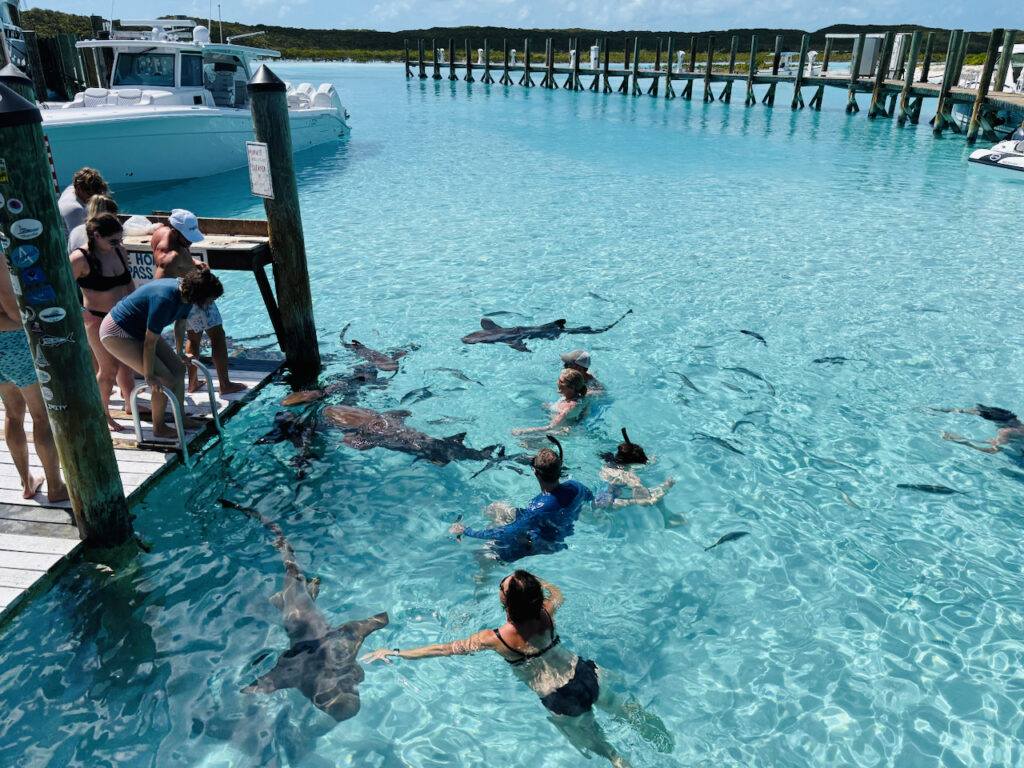
If the nurse sharks of Compass Cay had some porcine PR, they would give Pig Beach a run for its pork chops. For years, dozens of nurse sharks — ranging from pups to 10-foot adults — have gathered around a wooden fishing pier, feeding off reliable scraps and becoming docile and habituated in the process. Boaters now arrive to hop into the water with them, keeping their hands away from hungry mouths, while knowing the sharks tolerate and even enjoy gentle pets and hugs.
Swimmers receive an orientation about ethical behaviour in the water, and much like the pigs, it’s an animal encounter that appears mutually symbiotic. The nurse sharks are not enclosed or kept in captivity, and they are not being forced to perform. They are being fed by humans, which is altering their natural behaviour, and like the iguanas and pigs, I expect some readers might take issue with it. As for me, I watched in real-time as shark phobias got busted by these graceful, impressive creatures. Little kids hugging a friendly shark is the anti-Jaws, with deep benefits for shark conservation. Coupled with on-site education, it does wonders for respecting and protecting the ocean’s apex predator.
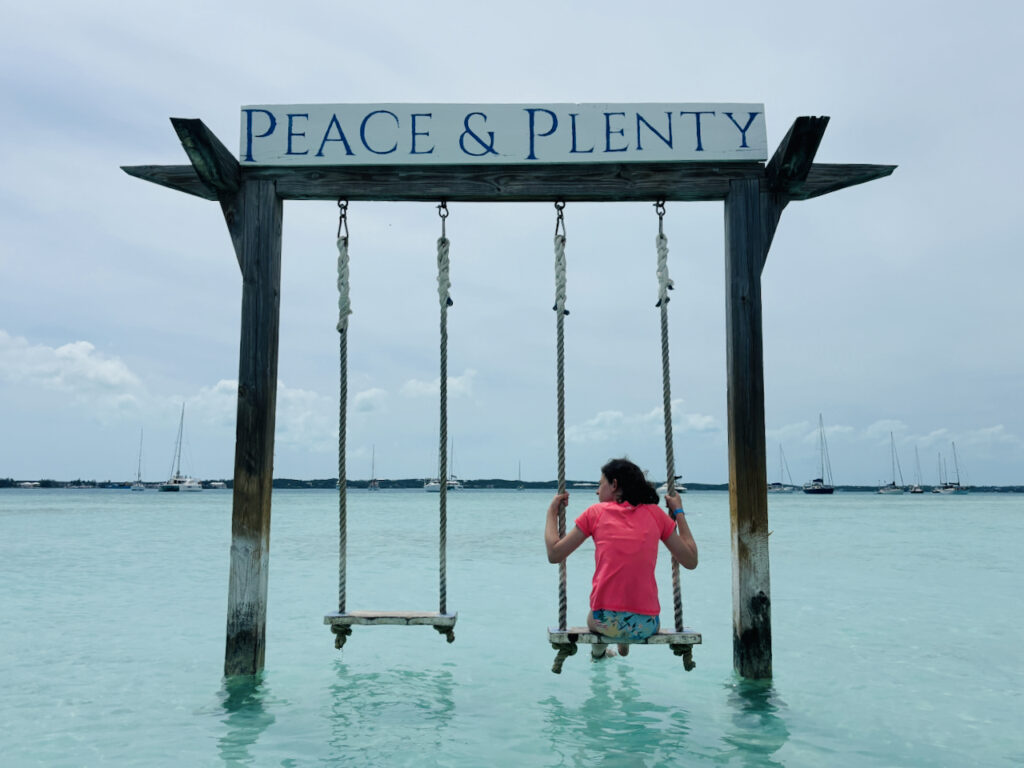
Having relocated to the historic Peace and Plenty Hotel in the island’s central hub of George Town, we cross the luminous waters of Elizabeth Harbour on several occasions to visit Stocking Island. Along the way, we spot several Canadian flags on the masts of the 500-plus boats and yachts anchored in the harbour over spring break.
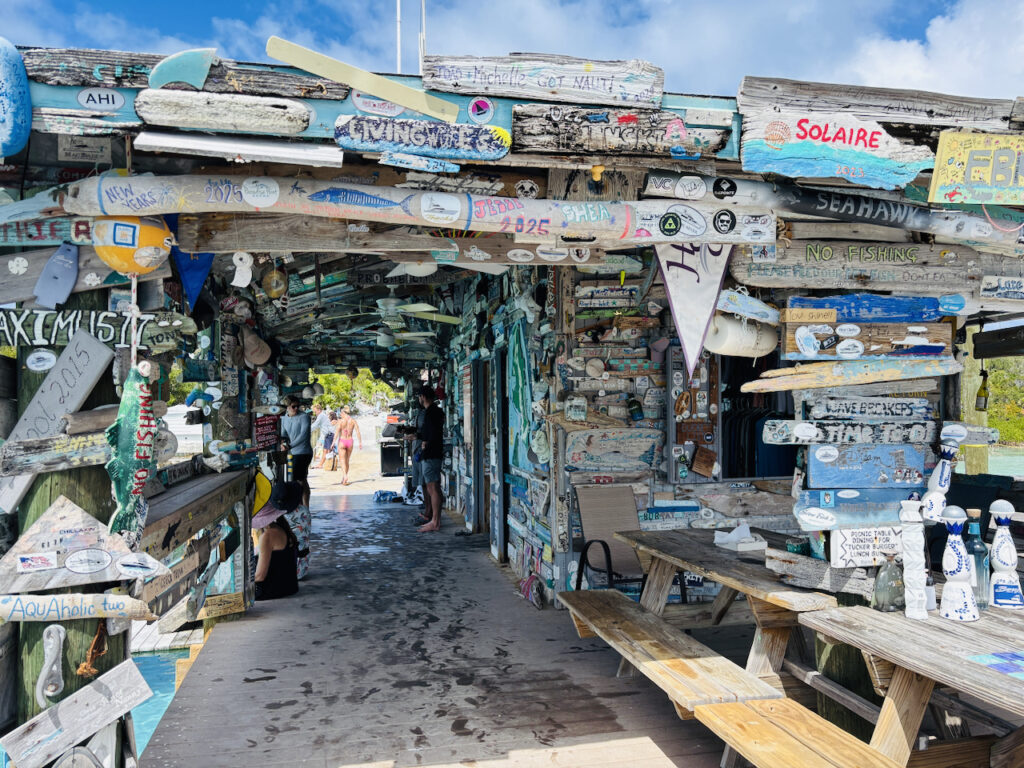
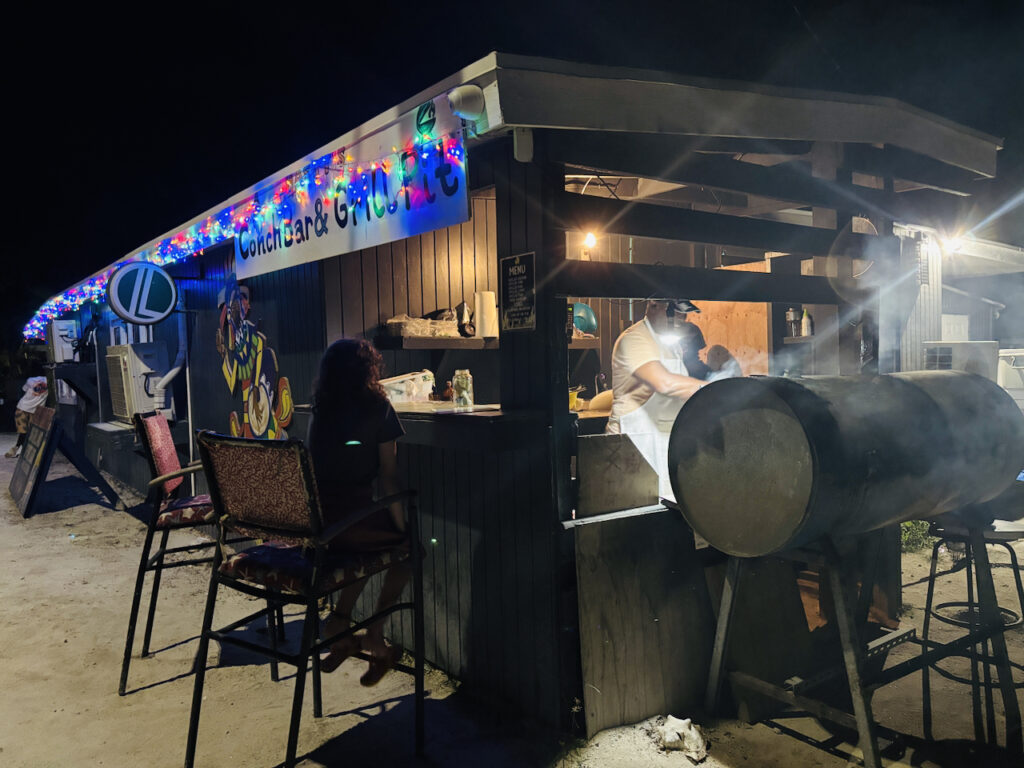
Stocking Island is home to several attractions, including beach games and water slides at the family-friendly Coconut Club — a must-visit with kids. A more rustic swing hangs from a tree over the water at the popular Chat ‘N’ Chill. Every beach bar we encounter drips with boating history, decorated with hanging shirts, yacht stickers, sailing graffiti, and hand-scrawled messages on taped dollar bills. Several bars and shacks appear to be held together by briny air, tall tales, and Goombay Smash, the region’s sweet rum cocktail.
Mocktails can be ordered ‘unleaded’, which is the responsible thing to do, as is applying sunblock. UV rays slam into you from both above and below, reflected from the water, and red-lobstering many an unsuspecting tourist.
On Stocking Island, we learn about the conservation efforts to keep this water so magical. Established in 1958, the Exuma Cays Land and Sea Park was one of the world’s first marine parks, a “no take” sanctuary zone covering 456 square kilometres of sea, islands and reef. Catherine Booker of the Bahamas National Trust guides us around the dense coppice forest of Moriah Cay National Park, pointing out the island’s flora and fauna, including silver top palms, pigeon plums, blue-tailed skinks and Bahamian ducks.
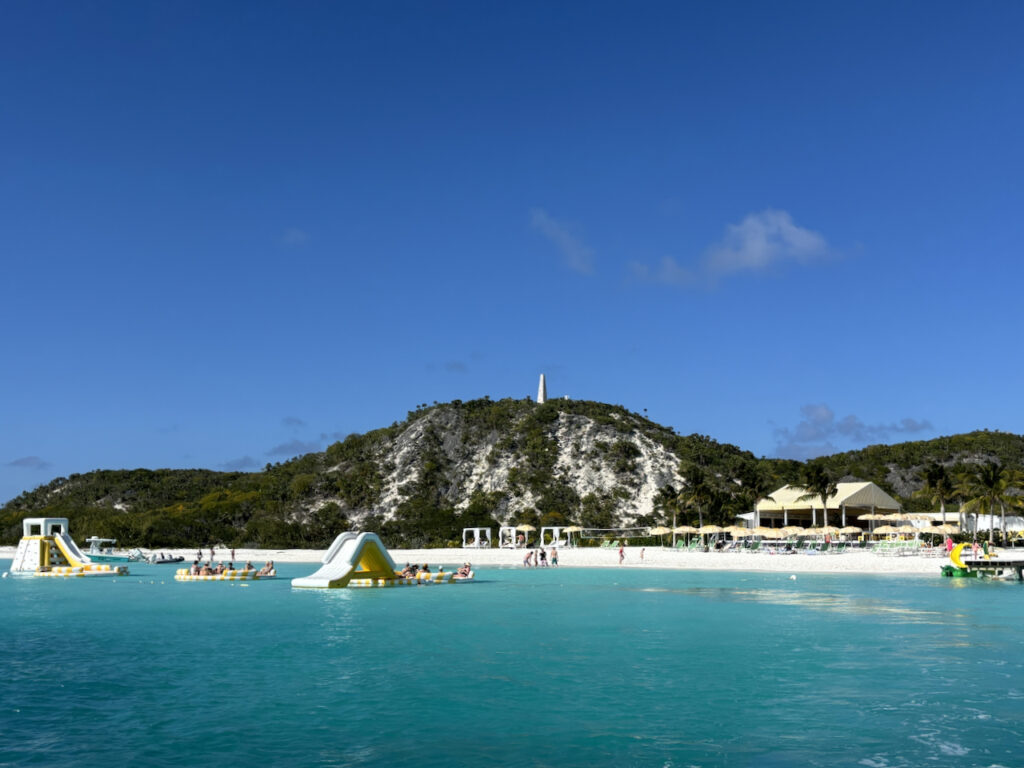
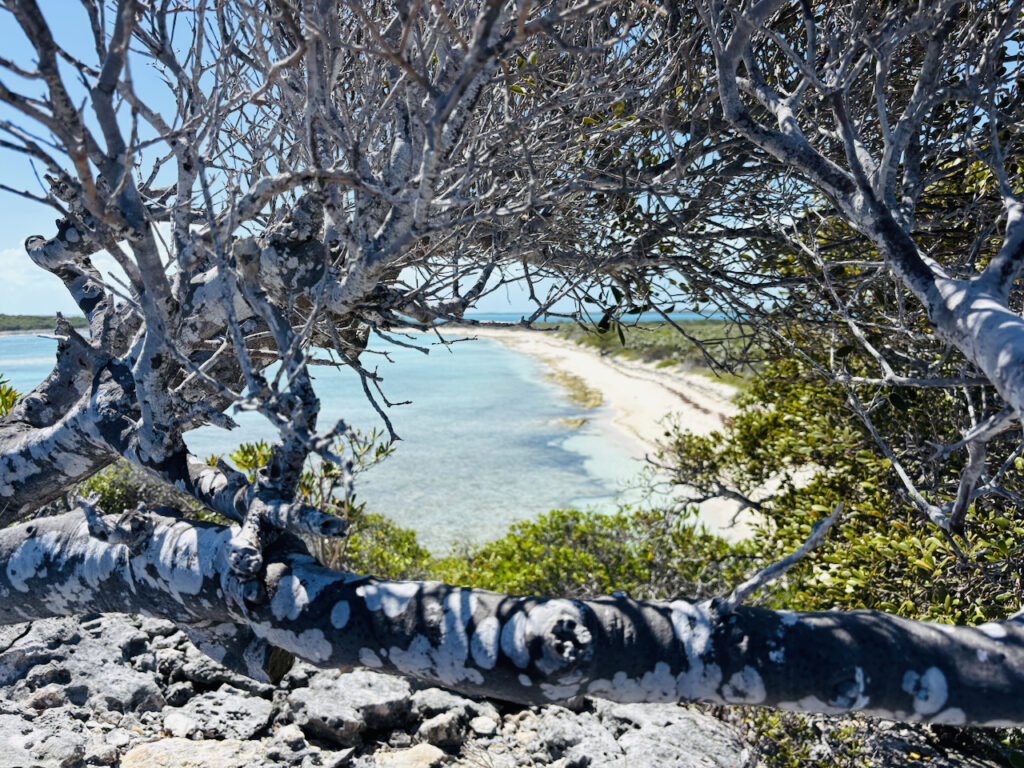
On the eastern shore, the dark, deeper waters of the North Atlantic Ocean smash into the rocks, bringing winds, tides, and other challenges. Plastic bags from Haiti wash up on one of the park’s beaches, inspiring an impromptu clean-up. Exuma’s tourist economy depends on clean water to sustain its reef, fishing communities and pristine sand bars for future generations.
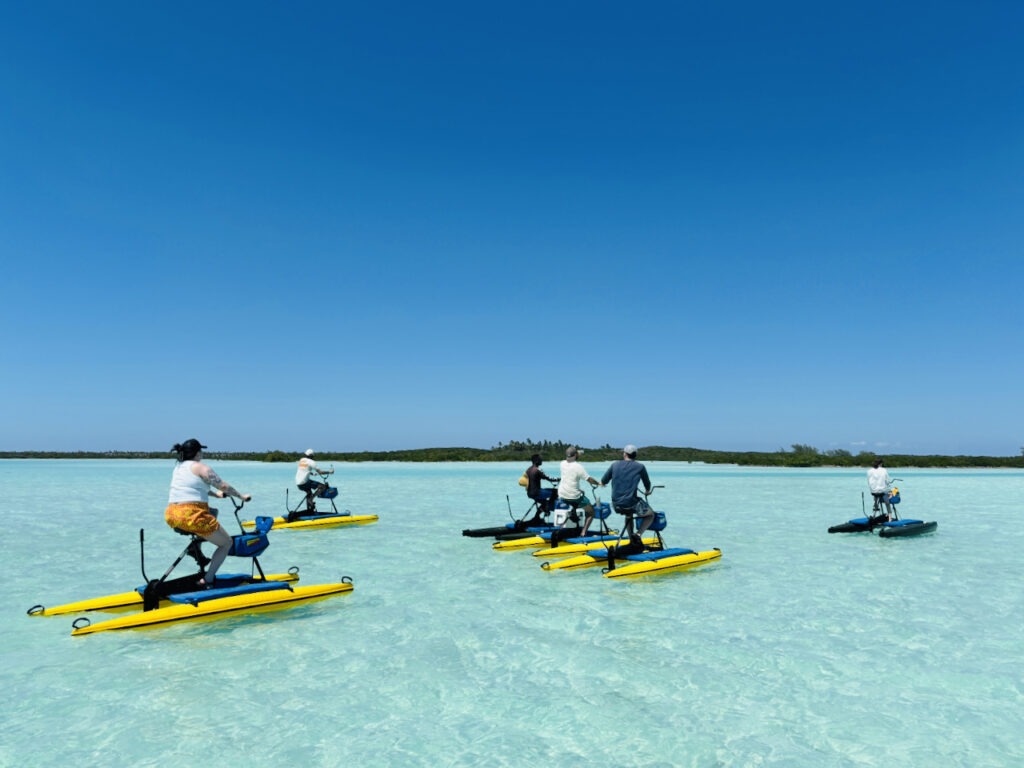
“It’s all about the water, because that’s what we got,” says Daran Clarke of Hydrowater Sports. “When we protect it, we can all see the benefits.”
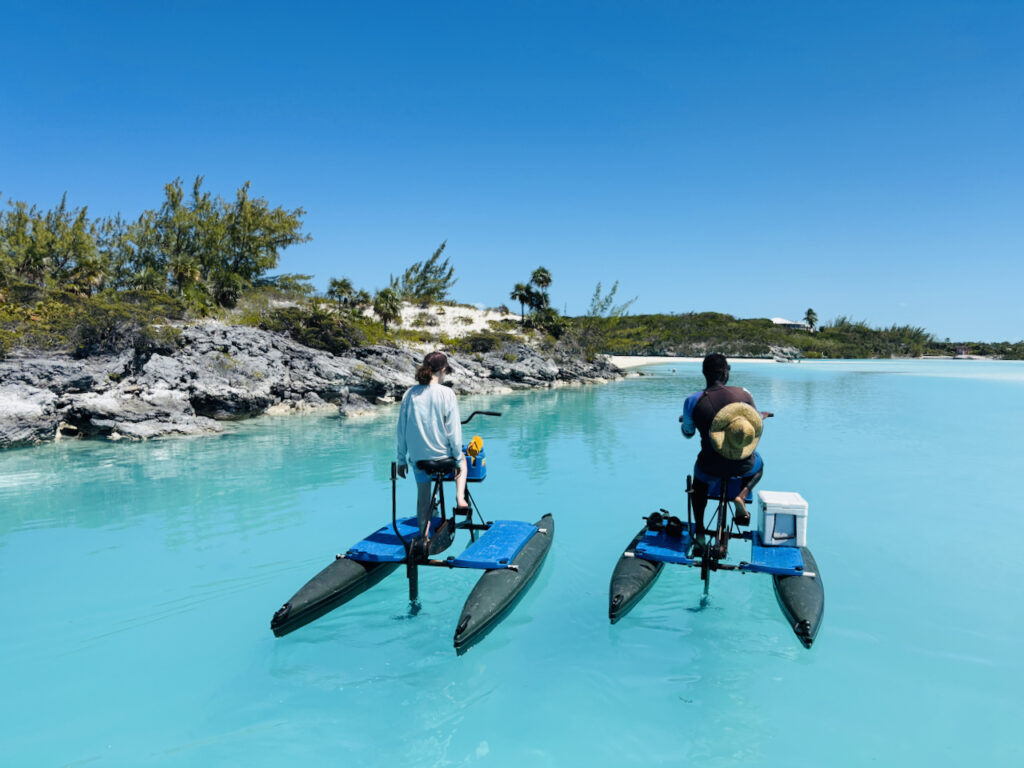
Clarke is a local accountant who audited his life and figured it would be a lot more fun to get out of the office and onto a hydro-bike. These easy-to-use, stable, and safe water bikes are ideal for exploring the shallow lagoons and robin’s-egg-blue waters leading to the Lazy River.
Eagle rays, lemon sharks, turtles, and other marine life are channelled under the bridge between the islands of Great and Little Exuma. Daran’s two-hour hydro-bike tour launches near the bridge at Forbes Hill and heads out with the current, with Daran’s good-natured enthusiasm sweeping everyone along. Guests are welcome to bring beers or float with younger kids seated on the bike pontoon (my 12-year-old had no issues with her own bike, and hydro-bikes leave no wake). The payoff is the Lazy River, a tidal phenomenon that effortlessly carries swimmers towards an inshore sandbar, where we can exit, walk across a cut, hop into the water, and go for another float. It’s a bucket-list experience that represents the best of Exuma: stunningly beautiful, fun, unique, memorable, and infused with a friendly local character.
While exploring the 209-kilometre length of The Exumas, we visit historical sites like the salt ponds and a monument to Pompey, a slave who escaped, was recaptured, executed, and later inspired rebellion. From the island’s Indigenous population to brutal Spanish colonizers and slave-owning American loyalists, history runs deep on these islands. Porous limestone soil prevented farming from taking off, but people have always travelled far in search of paradise.
Tourism brings opportunities, but, like the open ocean beyond the cays, it can also bring challenges. A population boom, overdevelopment, vast wealth inequality, and an incredibly high cost of living lie beneath the surface. “I used to roll down this hill in a tyre,” laughs Vencil Balfour, a veteran local guide with a booming laugh. “A lot less traffic in those days.” Fortunately, Exuma’s relative isolation and shallow sandbars steer large cruise ships and mass tourism toward Nassau. There are other islands in The Bahamas that excel in the slick and polish, but thanks to its fantasy-blue waters (Mint-fresh cobalt? Turbo-charged turquoise?) Exuma is the closest to paradise.
Travel
This five-star Bahamas resort boasts a fresh look and adults-only concept on Nassau's famous Cabbage Beach
History
The symbolism of the iconic Canadian fishing and racing schooner Bluenose may be as relevant today as it was 100 years ago when the ship first hit the water
History
Le symbolisme du Bluenose, l’emblématique goélette canadienne de pêche et de course, est peut-être tout aussi pertinent aujourd’hui qu’il y a 100 ans, lorsque le navire a touché l’eau pour la première fois

Science & Tech
Alberta-based computer scientist Mark Simpson can design anything he puts his mind to. So why has he chosen to chase tornadoes?